
A major house cleanout is way more than just tidying up. It's the whole process of systematically clearing out a property, whether you're moving, downsizing, or handling the sensitive task of a loved one's estate. It means you’ll be sorting, tossing, donating, and recycling possessions to finally reclaim your space.
From my experience, the most successful projects—from a simple declutter to a complex office or estate cleanout—all start with a solid plan. You need a game plan before a single box gets moved.
Your House Clean Out Starting Point

Let's be honest: tackling a huge cleanout can feel completely overwhelming. Whether you're staring down an entire home filled with years of stuff, managing an estate clean out, or coordinating a big office cleanout, the sheer size of the job can be paralyzing.
The secret? Don't think of it as one giant, impossible task. Break it down into a series of smaller, more manageable steps.
Your biggest ally here is momentum. Instead of getting bogged down by the finish line, just focus on getting a strong start. Proper prep is what separates a chaotic, stressful mess from a structured, efficient project. This first phase isn't about throwing things away yet; it’s about building the framework for success.
Creating Your Clean Out Blueprint
Before you lift a single item, take a moment to map everything out. What’s the real scope here? Are you clearing one cluttered room or an entire property? Is this a standard decluttering mission or something more specialized, like prepping a house for sale or liquidating business assets?
Once you know the "what," set a realistic timeline. A whole-house cleanout is not a weekend project. Trust me. To avoid burnout, break it down by room or even by category (like clothes or books), and assign specific days or weeks to each area. If you need a hand figuring out where to even begin, this guide on how to declutter your house has some fantastic, simple tips.
Next, get your supplies together. You're going to need more than just a few trash bags.
- Heavy-duty boxes in a few different sizes.
- Strong packing tape and a dispenser (this is a lifesaver).
- Thick marker pens for clear, bold labels.
- Durable work gloves to protect your hands.
- Basic cleaning supplies like cloths and an all-purpose spray.
Making this small investment upfront will save you from countless frustrating interruptions later. It means that when you find something to keep, donate, or sell, you have a designated spot for it ready to go.
To keep you on track, here's a quick checklist to run through before you dive in.
Initial Clean Out Project Checklist
This table is your quick-start guide to make sure you've covered all your bases before the real work begins.
| Task | Objective | Recommended Timeline |
|---|---|---|
| Define Scope | Know exactly what you're clearing (e.g., garage only, whole house). | 2-3 Weeks Before |
| Set Timeline | Break the project into manageable daily or weekly goals. | 2 Weeks Before |
| Gather Supplies | Purchase boxes, tape, markers, gloves, and bags. | 1 Week Before |
| Arrange for Disposal | Research dumpster rentals or junk removal services. | 1-2 Weeks Before |
| Plan for Donations | Identify local charities and check their donation rules/hours. | 1 Week Before |
Having these logistics handled ahead of time makes the entire process smoother and far less stressful.
The Role of Professional Services
Many people find it easier to outsource parts of their cleanout, which makes a lot of sense. The global cleaning services market was valued at around USD 415.93 billion in 2024, with North America holding a massive 45% revenue share. This isn't just a random statistic; it shows a real, widespread preference for hiring pros to handle big or specialized jobs efficiently.
Key Takeaway: The most crucial step in any house cleanout happens before you start sorting. A clear plan, a realistic timeline, and the right supplies are the foundation for a less stressful and more successful project.
Thinking ahead about professional help is a key part of this initial planning. Will you need a dumpster rental for all the trash? Should you schedule a pickup from a local charity for that bulky furniture you're donating? Or does it make more sense to hire a junk removal company for the final haul-away? Answering these questions now prevents delays and logistical headaches when you're already knee-deep in clutter.
Wrestling with the Reality of an Estate Cleanout
Let’s be clear: an estate cleanout is in a league of its own. It's nothing like tidying up your garage on a Saturday afternoon. This is an intensely personal journey, almost always happening during a time of grief, and it demands a tough mix of emotional strength and practical action. You're not just sorting through stuff; you're sorting through a lifetime of someone else’s memories, making this a uniquely challenging type of house clean out.
The emotional toll can be staggering. A simple photograph, a worn-out armchair, a handwritten note—each one can bring a flood of memories and feelings. It’s absolutely critical to go into this with compassion, not just for the person whose home you're clearing, but for yourself and any other family members involved.
This isn’t just about manual labor. It's about honoring a legacy while getting a property ready for whatever comes next.
First Things First: Find and Protect Important Documents
Before a single box is packed or a piece of furniture is moved, your number one job is to find and secure every essential document. These papers are the key to settling the estate, and they have a knack for being scattered in the most unlikely places.
Methodically check the obvious spots first—desks, filing cabinets, and safes. But don't stop there. I've found critical papers tucked into kitchen drawers, hidden in bedside tables, and even used as bookmarks. Keep a sharp eye out for anything that looks official.
Get a dedicated, secure “documents box” and immediately place these items inside as you uncover them:
- Legal Papers: The will, trust documents, and any power of attorney forms are top priority.
- Property Records: Look for house deeds, car titles, and mortgage statements.
- Financial Details: Gather bank statements, tax returns, insurance policies, and any information on investments or retirement accounts.
- Personal IDs: Collect birth certificates, social security cards, passports, and marriage licenses.
Expert Tip: Don't try to sort or organize these papers right away. The main goal is to get everything into one safe, centralized spot for the estate’s executor or lawyer. This simple step prevents things from getting lost in the shuffle and makes the legal side of things much smoother.
How to Handle Valuables and Sentimental Items
Deciding what to do with valuable and sentimental belongings is often the most emotionally difficult part of a cleanout. One person’s priceless heirloom is another’s clunky old vase, and these different views can quickly spark family disagreements.
For items with potential monetary value—like jewelry, art, antiques, or collections—the smartest move is to bring in a professional appraiser. An expert provides an unbiased, objective valuation that gives everyone a clear starting point for making decisions. It’s the best way to keep arguments over an item's worth from starting in the first place.
Sentimental items are a different story. Their value is in the memories they hold, not their price tag. Give family members a chance to walk through the home and point out things that are meaningful to them. This has to be a patient and empathetic process.
Here are a few fair ways to divide things up:
- Make a shared list: Everyone can list the items they’d love to have. If there are overlaps, you can draw names to decide who gets it.
- Take turns: Go from room to room and let each person pick one item in a rotating order.
- Digitize memories: For bulky things no one can take, like photo albums or boxes of letters, take high-quality pictures. You get to keep the memory without needing the storage space.
If you're planning to sell a large portion of the contents, using a complete guide on how to organize an estate sale can be a lifesaver, helping you get the most value while managing all the logistics.
Treating a loved one’s possessions with this level of care turns a massive chore into a meaningful act of remembrance.
It’s easy to see why these projects are so all-consuming. On average, people already spend 2 to 4 hours weekly on regular cleaning, which adds up to an incredible 1.5 years over a lifetime. It’s no surprise that 7 in 10 people feel they don’t have enough time for cleaning, which makes professional help an absolute necessity for a task as huge as an estate cleanout.
Executing a Seamless Office Cleanout
While an estate cleanout is often rooted in emotion, an office cleanout is all about business. This is a specialized type of house clean out that brings its own set of high-stakes challenges, from dealing with sensitive company data to liquidating heavy, commercial-grade furniture. For any business owner or office manager, the mission is clear: execute a clean, compliant, and secure transition that causes the least possible disruption to your operations.
This isn't just about emptying a building; it's about protecting your business at every turn. You need a different mindset—one focused on asset management, data security, and sheer operational efficiency. A well-planned office cleanout ensures nothing valuable or confidential ever slips through the cracks.
Asset Inventory and Liquidation Strategy
Before you can move a single thing, you need to know exactly what you have. The first real step is creating a comprehensive inventory of all your company assets. This means a systematic walkthrough of the entire space, and I mean everything.
Don't just count desks and chairs. A detailed inventory separates items into clear categories, which makes the decision-making process down the line a whole lot easier.
- Technology & Electronics: List every computer, monitor, server, printer, and piece of networking equipment. Jot down the model and its general condition.
- Office Furniture: Document all desks, chairs, filing cabinets, conference tables, and reception furniture.
- Specialized Equipment: This bucket is for any industry-specific machinery, kitchen appliances, or unique tools you might have.
- Supplies & Decor: They might seem low-value, but office supplies, plants, and even wall art add up and need to be accounted for.
Once your list is complete, you can build a smart liquidation strategy. Not everything has to be hauled to the dump. Think about selling newer or high-value items to other businesses or working with a commercial liquidator. It’s a great way to offset the costs of the move or closure.
The Non-Negotiable Step: Data Security
In any office cleanout, data security is absolutely paramount. I can't stress this enough. A single misplaced hard drive or a poorly discarded stack of papers can spiral into a devastating data breach, leading to massive fines and doing irreversible damage to your company's reputation.
And no, simply deleting files doesn't cut it. You have to ensure all digital data is professionally and permanently destroyed.
Critical Reminder: A staggering 60% of small companies go out of business within six months of a cyber attack or data breach. Securely managing your data during a cleanout isn't just a good idea—it's one of the most important risk-management actions you can take.
For physical documents, the only real solution is secure shredding. Hire a professional shredding service that gives you a certificate of destruction. That piece of paper is your proof of compliance and due diligence. For digital media, you've got two main options:
- Physical Destruction: This is the most direct method. It involves shredding, crushing, or degaussing hard drives, which makes data recovery physically impossible.
- Professional Wiping: A certified technician uses specialized software to completely erase all data to Department of Defense standards.
Never, ever assume an old computer is "clean." Every single device that has ever stored company or customer information needs to be handled with extreme care.
Handling E-Waste and Commercial Furniture
So, what do you do with a dozen outdated monitors or that massive conference table nobody wants? Responsible disposal is a huge part of a modern office cleanout. Tossing electronics in a dumpster is not only environmentally irresponsible, but it's often illegal.
Electronic waste, or e-waste, is packed with hazardous materials like lead and mercury. These items must be taken to a certified e-waste recycling facility. Many junk removal pros, like our team at Green Guys Junk Removal, partner with these facilities to guarantee compliant disposal.
Commercial furniture presents a different kind of headache. It’s often too big or specialized for the usual donation centers. Here are a few solid options:
- Habitat for Humanity ReStore: These stores are fantastic and often accept office furniture that’s still in good shape.
- Furniture Banks: Look for local non-profits that might take your donations to help furnish offices for other charities.
- Commercial Liquidators: These companies may be interested in purchasing entire lots of furniture for resale.
By planning ahead for these big-ticket items, you can dodge last-minute disposal nightmares and ensure your office cleanout is as green as possible. This kind of strategic thinking is what turns a potentially chaotic project into a structured and seamless business operation.
A Practical System for Sorting Your Belongings
Once you have a high-level plan for your estate clean out or office cleanout, it's time to roll up your sleeves and get into the details. This is the part where you see real, tangible progress. Forget the vague advice you've heard before, like "just make a few piles." A successful house clean out isn't about guesswork; it’s about having a clear, structured system that keeps you moving forward.
The secret is to create designated zones for every single item you touch. This approach stops you from just shuffling things around without ever making a final decision—a classic cleanout mistake. By setting up a solid multi-bin system, you create a workflow that makes every choice count.
Setting Up Your Sorting Stations
Before you even think about tackling the first room, get your sorting stations ready. This means having clearly labeled boxes, bins, or even just designated corners of a room for each category. Your goal is to touch each item only once.
Here are the core categories you'll need:
- Keep: Items you genuinely love, use all the time, or need for practical reasons.
- Donate: Things that are in good, usable condition but no longer serve a purpose for you.
- Sell: Belongings with resale value that you're ready to part with.
- Recycle: Paper, plastics, metals, and glass that can be processed.
- Discard/Trash: Anything that’s broken, expired, or truly unusable.
Think of this as your command center. As you pick up an object, you’ll make a quick, decisive choice and place it in its corresponding station. No "maybe" pile allowed. This is what prevents you from getting bogged down. Once you've decided what to keep, using professional packing strategies can make organizing the remaining items a much smoother process.
A Room-by-Room Strategy to Avoid Burnout
Trying to clean out the entire house at once is a guaranteed recipe for overwhelm. Instead, take it room by room. Focus all your energy on finishing one space completely before you even think about the next. I always recommend starting with the easiest room—maybe a small bathroom or guest bedroom—to score a quick win and build some momentum.
Within each room, break it down even further. For instance, in a bedroom, start with all the clothes. Once that's done, move on to books, then decor. This "micro-tasking" approach makes a huge project feel far more manageable.
A Real-World Scenario: Let's say you're clearing out an old home office and find a vintage wooden desk. It's solid, but covered in scratches. Do you keep it? A quick search online for similar desks shows they sell for about $100 when restored. The materials to fix it might cost $40, plus a weekend of your time. If that trade-off feels worth it, it goes into the "Keep/Restore" pile. If not, it moves straight to "Donate." This kind of objective thinking helps you get past the emotional roadblocks.
Handling Challenging Item Categories
Some things are just plain tough to sort. It's smart to have a game plan for these common hurdles so you don't lose your pace.
- Outdated Electronics: These can't just be tossed in the regular trash. Set them aside in a dedicated "E-Waste" box. You'll take these to a certified electronics recycler later.
- Mountains of Paperwork: For non-critical papers, a shredder is your best friend. For anything that looks potentially important (especially in an estate clean out), put it in a separate "Review Later" box to sift through after the heavy clearing is done.
- Expired Pantry Goods: Be ruthless. Anything past its expiration date gets tossed immediately. For non-perishable food that's still good but unwanted, set up a donation box for your local food bank.
The infographic below offers a simple look at the final disposal phase once your sorting is done.
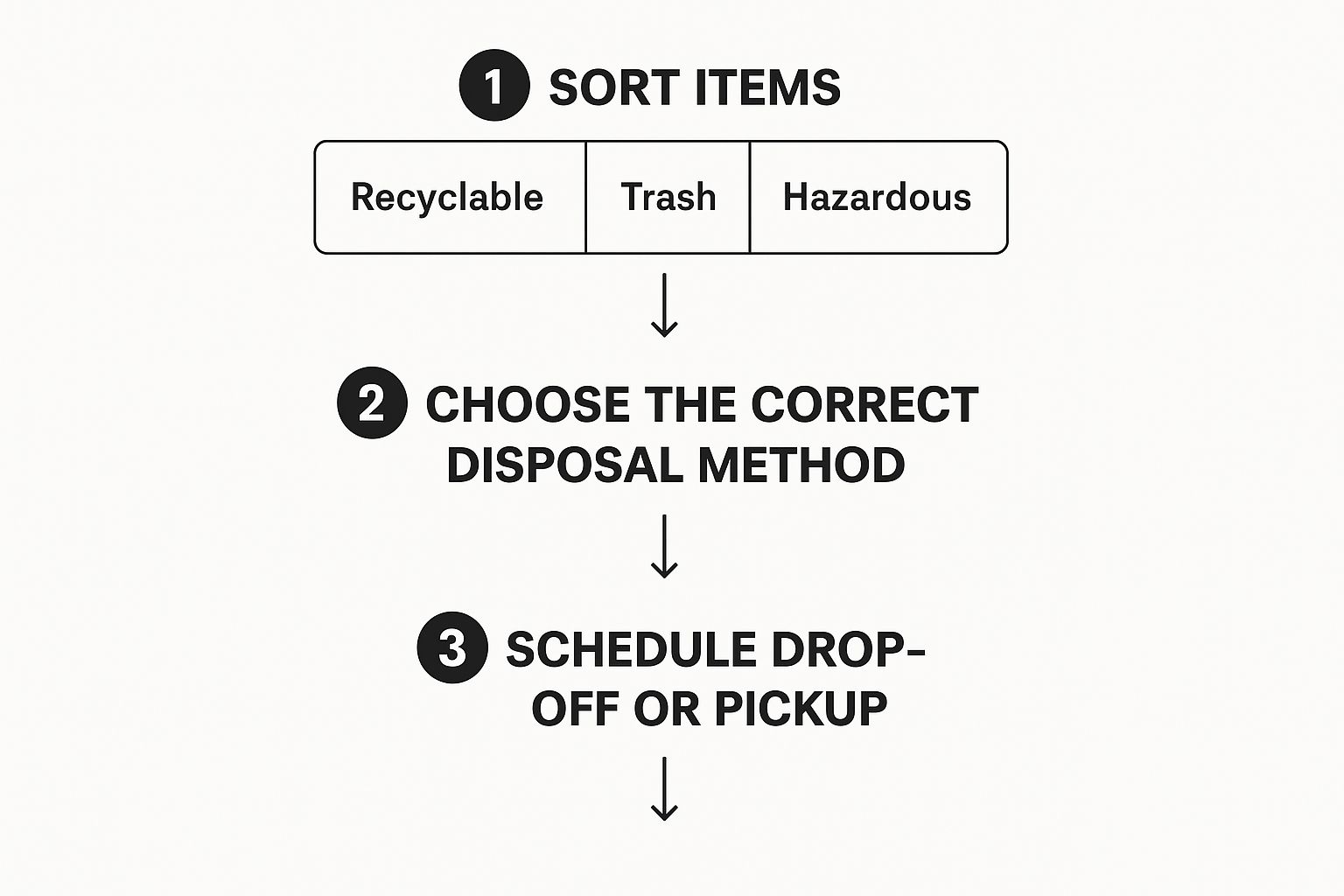
This visual really simplifies things, showing that sorting is just the first part of a clear, three-stage process to responsibly clear out your space.
Smart Strategies for Selling and Donating Items
Alright, you’ve sorted your belongings into piles. Now comes the satisfying part: getting everything out of your house for good. This is where you can be smart about how you donate and sell your unwanted stuff, ensuring you reduce waste, help out your community, and maybe even pocket a little cash.
We’re going to move beyond just dropping bags at the nearest thrift store. We'll look at specialized donation centers, effective selling platforms, and—crucially—how to handle those tricky hazardous materials. This is a vital step that people often miss, whether they're doing an office cleanout or a massive estate clean out.
Maximizing Your Donations
Let's be honest, not all donation centers are the same. While the big national charities are fantastic for clothes and general housewares, other organizations are hungry for specific items. A little strategic thinking here can make a world of difference.
Before you just load up the car, a quick online search for local specialty non-profits can be a game-changer. Look for places like:
- Furniture Banks: These incredible organizations specifically take gently used furniture to help families getting back on their feet after homelessness or other crises.
- Habitat for Humanity ReStore: A goldmine for donating leftover building materials, old light fixtures, working appliances, and bigger furniture pieces from your cleanout.
- Animal Shelters: Your local shelter can almost always use old towels, blankets, and even cleaning supplies.
- E-Waste Recyclers: Most communities have dedicated facilities for old electronics. This keeps toxic materials out of our landfills, which is a huge win.
Pro Tip: Always, always call ahead or check the organization's website before you drive over. Confirm their donation hours and ask what they’re currently accepting. This one simple step can save you the headache of a wasted trip with a car full of stuff you have to bring right back home.
Avenues for Selling Your Valuables
For everything in your "Sell" pile, you've got options. The right choice really boils down to the item's value, how quickly you need it gone, and how much elbow grease you're willing to put in.
An estate sale company is a lifesaver for a full-blown estate clean out. They come in and handle everything—pricing, staging, advertising, and running the sale—for a commission. It’s the most hands-off approach when you’re dealing with a high volume of items.
For selling things one by one, online marketplaces are your best friend. Facebook Marketplace and OfferUp are perfect for selling furniture and larger items locally, saving you the nightmare of trying to ship a sofa. If you have collectibles, antiques, or designer goods, eBay opens your items up to a national audience, but it definitely requires more work with photos, descriptions, and shipping.
The Critical Task of Hazardous Waste Disposal
During any deep cleanout, you’re bound to unearth items that absolutely cannot be thrown in the trash or donated. I’m talking about old paint, harsh cleaning chemicals, dead batteries, and those long fluorescent bulbs. This is all considered household hazardous waste (HHW).
Tossing these materials in your bin is a huge no-no; they can contaminate soil and water. Your local municipality or county has specific rules for HHW. Most run designated drop-off days or have permanent facilities where you can safely get rid of this stuff. Whatever you do, never pour chemicals down the drain.
This final step is more important than ever. The global market for household cleaning products was a staggering USD 235.94 billion in 2024 and is projected to hit USD 384.31 billion by 2034. This boom in hygiene products means we're all dealing with more chemical waste, making responsible disposal during a cleanout a top priority. You can learn more about these market trends and their implications to understand the bigger picture.
Disposal Options for Common Cleanout Items
To make things a little easier, I’ve put together this quick comparison table. It’s a simple guide to help you figure out the best way to get rid of the most common items you’ll find during a cleanout.
| Item Type | Best Selling Option | Best Donation Option | Disposal/Recycling Note |
|---|---|---|---|
| Furniture | Facebook Marketplace, Estate Sale | Furniture Bank, Habitat for Humanity | Most haulers charge extra for bulky items. |
| Electronics | Decluttr, Gazelle | Local E-Waste Charity | Must be taken to a certified recycler. |
| Clothing | Poshmark, ThredUP | Local Shelters, Goodwill | Textile recycling programs for damaged items. |
| Building Materials | Craigslist (Free Section) | Habitat for Humanity ReStore | Often requires a specialized hauling service. |
Choosing the right path for each item—whether it's selling, donating, or recycling—is the final piece of the puzzle. It not only clears your space but also ensures your old belongings find the best possible new home or are disposed of safely.
Your Top House Clean Out Questions, Answered
Once you get started on a big project like this, questions are bound to pop up. It's only natural. Whether you're sorting through a loved one's belongings during an estate clean out or coordinating a massive office cleanout, unique challenges always arise. Having good answers helps you stay on track and feel confident in your decisions.
Think of this as your go-to guide for those tricky situations. Instead of getting bogged down wondering what to do next, you can find straightforward, practical advice right here to keep things moving.
How Much Does a Professional House Clean Out Cost?
This is usually the first thing people ask, and the most honest answer is: it really depends. The price for a professional house clean out isn't a simple, flat fee. It’s shaped by a few key factors that can swing the final cost quite a bit.
Here’s what drives the price:
- Volume of Junk: Most junk removal companies, including us, price jobs based on how much truck space your stuff takes up. Clearing out a couple of old couches is a world away from emptying a packed, multi-level home.
- Type of Items: Heavy materials like old concrete or construction debris often have different pricing structures compared to general household clutter.
- Accessibility: Is everything piled neatly in the garage? Or does it need to be carefully carried down three flights of stairs from a tight attic? The labor involved is a big part of the equation.
- Special Services: If you need extra help like light demolition (think tearing out old carpets or a rickety shed), hazardous waste handling, or a deep clean after the junk is gone, these will be priced as add-ons.
Just as a ballpark, a small job might run a few hundred dollars. But a full estate cleanout or a hoarding situation can easily range from $1,500 to over $5,000. The most important thing you can do is get several on-site estimates. Never trust a quote given over the phone without the company first seeing what they're dealing with.
Key Takeaway: Always get a firm, written quote from a licensed and insured junk removal company before they start any work. It’s the best way to avoid surprise charges and ensure you’re hiring a true professional.
What Is the Fastest Way to Clean Out an Entire House?
When you’re on a tight deadline, speed comes from a mix of smart planning and calling in the pros. The fastest way to tackle a whole house is with a coordinated, all-hands-on-deck approach.
The secret is to stop thinking linearly. Don't try to do everything yourself, one task after another. Instead, get a few things happening at once. While you're busy sorting items into "keep," "sell," and "donate" piles, have a professional crew ready to tackle the "junk" pile as soon as it forms.
Here's a quick blueprint for a speedy cleanout:
- Get a Dumpster On-Site: Before you even start, have a dumpster delivered. This gives you an instant home for all the obvious trash, so it doesn't get moved around more than once.
- Schedule a Charity Pickup: Call your favorite local charity well ahead of time to get on their schedule for large furniture or other big donations. This gets bulky items out of your way without you lifting a finger to haul them.
- Hire a Professional Junk Removal Service: This is the ultimate shortcut. A good crew can clear out what took years to accumulate in just a few hours—a job that could take one person weeks to finish.
This strategy cuts down on your personal labor and the endless back-and-forth trips, turning a potential marathon into a much more manageable sprint.
What Should I Do with Sentimental Items I Cannot Keep?
This is often the toughest, most emotional part of an estate clean out. You come across an object that’s full of memories, but you simply don't have room for it. It can feel like letting go of the item means letting go of the memory, but it doesn't have to.
The goal is to honor the memory, not just warehouse the object. Try creating a digital scrapbook by taking beautiful photos of these special items. You can add notes about the stories behind them, creating a lasting tribute that’s easy to share with family.
Another wonderful option is to offer these items to other relatives or close friends who also shared a connection to the person. That piece you can't keep might be the perfect memento for a cousin, niece, or old family friend. For smaller treasures like medals, jewelry, or photos, a "memory box" is a perfect solution. You get to keep a curated collection of the most meaningful pieces without being overwhelmed by bulky furniture.
How Do I Handle Important Documents Found During an Estate or Office Cleanout?
This is one area where you absolutely cannot afford to make a mistake. Messing this up can have serious legal or financial fallout. The second you find anything that looks like an official paper, it needs to be set aside and secured.
For both an estate clean out and an office cleanout, the first step is the same. Grab a sturdy, empty box and label it clearly: "Important Documents." As you find papers, put them straight into this box. Don't waste time trying to sort or organize them on the spot—just secure them.
Be on the lookout for things like:
- Estate Documents: Wills, trusts, property deeds, vehicle titles, recent tax records, bank statements, insurance policies, and any official certificates (birth, marriage, death).
- Office Documents: Financial records, tax filings, employee files, client contracts, incorporation papers, or patents and intellectual property documents.
Once the cleanout is done, this box has to go to the right person. In an estate situation, that’s the designated executor of the will. For an office cleanout, the documents belong to the business owner, the legal department, or a designated manager. Protecting these papers isn't just a good idea; it's a critical responsibility.
When you're staring down a massive cleanout and need help that’s fast, professional, and eco-friendly, the team at Green Guys Junk Removal is ready to go. We give you transparent, upfront pricing and send experienced crews to handle everything from single-item pickups to complete estate and office cleanouts across the metro Atlanta area. Reclaim your space the easy way by booking online or giving us a call for a free estimate.
Article created using Outrank