
Staring down a cluttered storage unit can feel like standing at the base of a mountain. It's easy to get overwhelmed, but I promise you, with the right strategy, you can turn that chaotic mess into a totally manageable project. This is especially true for complex situations like an office or estate cleanout.
The secret? Don't just dive in. You need to break the process down into simple, actionable steps: figure out what you've got, sort it with a clear system, and then deal with getting rid of it. This planned approach is what separates a successful cleanout from a weekend of burnout.
Your Game Plan for a Successful Storage Unit Cleanout
Before you even think about sliding that roll-up door open, you need a solid plan. I’ve seen it time and time again—people who try to tackle a clean out of storage units without a strategy end up frustrated, exhausted, and making decisions they regret later. The goal isn't just to empty the unit; it's to do it with purpose. This is true whether you're sorting through your own personal belongings, handling a big office cleanout, or navigating a sensitive estate cleanout.
A good game plan starts with one simple question: What's the end goal? Are you clearing it out for good, or just trying to make sense of the chaos and reorganize? Knowing your objective from the start is your North Star. It's especially crucial in complex situations, like liquidating business assets during an office cleanout or sorting through a loved one’s possessions in an estate cleanout, where every decision feels a bit heavier.
Assess and Set Your Goals
First things first, take a quick peek inside. You don’t need to start digging through boxes just yet. Simply get a visual sense of the volume and the type of stuff you're up against. This initial look-see is incredibly helpful for estimating how much time and what kind of supplies you'll need. A unit crammed with personal effects is a very different beast than one packed with bulky furniture, fragile items, or stacked-up office equipment from a business.
Once you have a mental picture, set a realistic timeline. A small 5×5 unit might only take a few hours, but a packed 10×20, especially one for a business or an estate, could easily eat up a full weekend. Block out dedicated, uninterrupted time on your calendar to get it done.
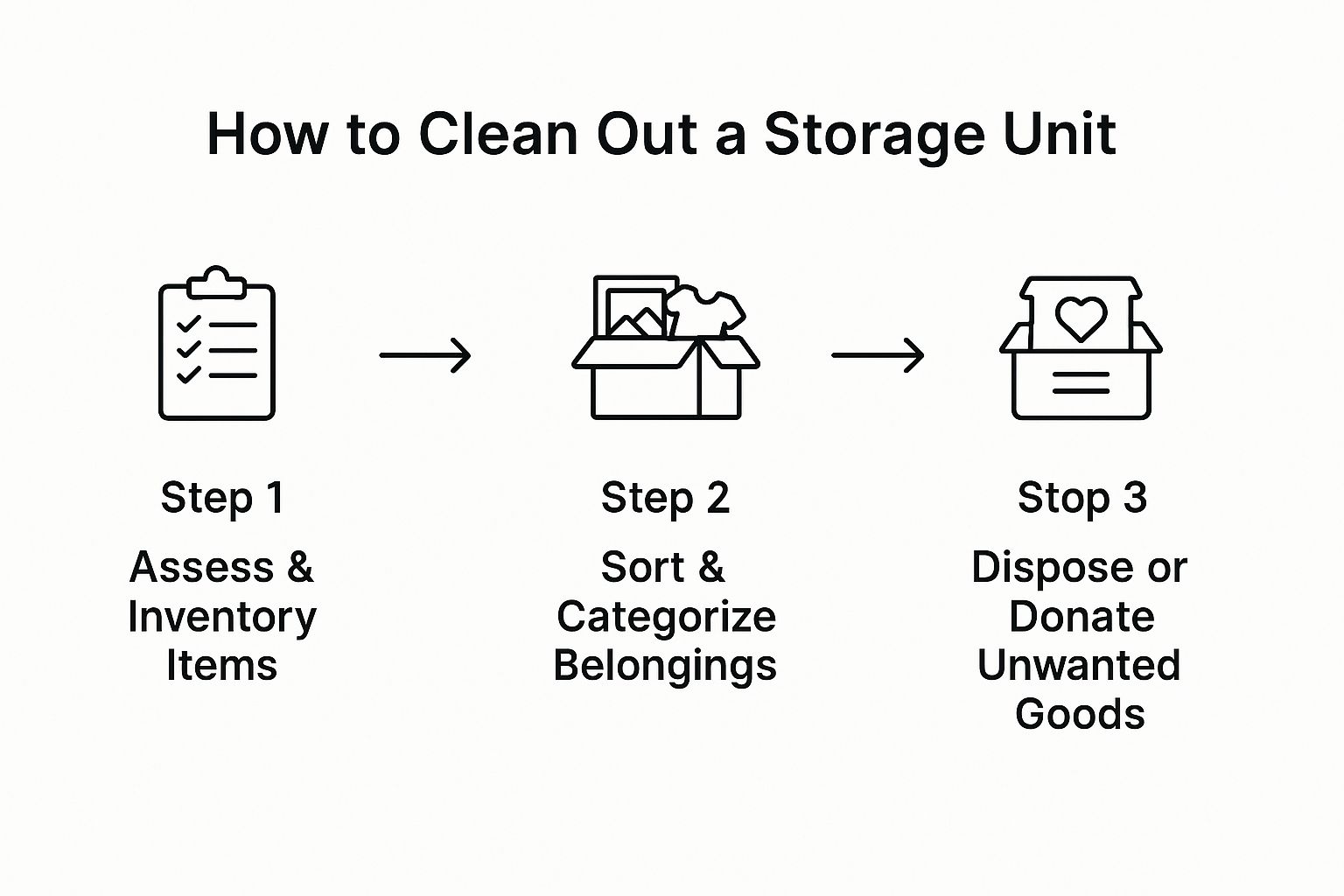
This simple, three-stage process—Assess, Sort, and Dispose—is the foundation of every successful cleanout. Following this workflow creates a logical path forward and stops you from getting stuck in the "what do I do next?" phase.
The Four-Category Sorting System
Once you're ready to start physically sorting, don't overcomplicate things. Every single item that comes out of that unit should fall into one of four categories. This simple system keeps you from agonizing over every little thing and helps you move quickly, which is vital for large office or estate cleanouts.
Use this straightforward framework to quickly categorize every item from your storage unit.
| Category | Action | Examples |
|---|---|---|
| Keep | Designate a "keep" zone and move items there. | Sentimental items, useful furniture, important documents, company assets to be retained. |
| Donate | Place in separate bags or boxes for donation. | Gently used clothing, functional housewares, books, unwanted office furniture in good shape. |
| Sell | Set aside in a "sell" pile for later. | Collectibles, valuable electronics, designer goods, bulk office equipment. |
| Toss/Junk | Throw directly into heavy-duty trash bags or a junk pile. | Broken items, expired goods, old papers, anything damaged, stained, or unusable. |
This method forces you to make a quick decision on every item, which is the key to maintaining momentum and avoiding decision fatigue.
Gather Your Essential Supplies
Showing up unprepared is a recipe for disaster. There's nothing worse than getting into a good groove, only to realize you have to stop everything and run to the store. Trust me on this one—get your tools ready beforehand.
Here’s a checklist of what I always bring:
- Heavy-duty trash bags for all the junk and debris.
- Sturdy boxes or bins to sort the items you plan to keep, sell, or donate.
- Work gloves and a dust mask to protect yourself from years of settled dust and grime.
- Markers and labels so you can clearly identify what's in every single box. No mystery boxes allowed!
As you get into the thick of your cleanout, a deeper understanding various self storage facilities can be surprisingly helpful for managing your current space or planning for the future. The self-storage market is massive—it was valued at around $56.81 billion in 2023 and is still growing. That boom just underscores how important efficient cleanout and management practices have become for everyone.
Executing the Sort and Organization Process
Alright, you've got your plan and your supplies. Now it's time to roll up your sleeves and get to work. When it comes to how to clean out storage units, the best approach I've found is to be methodical. Don't just start grabbing things at random—you'll create a bigger mess and box yourself in.
Start at the very front of the unit and work your way to the back. This simple strategy creates a clear path and gives you a staging area.
Bring one item out at a time and make a decision on the spot: Keep, Donate, Sell, or Toss. Use the designated zones you set up outside the unit for each category. This is key. It keeps chaos at bay, helps you see your progress, and prevents you from second-guessing every decision.
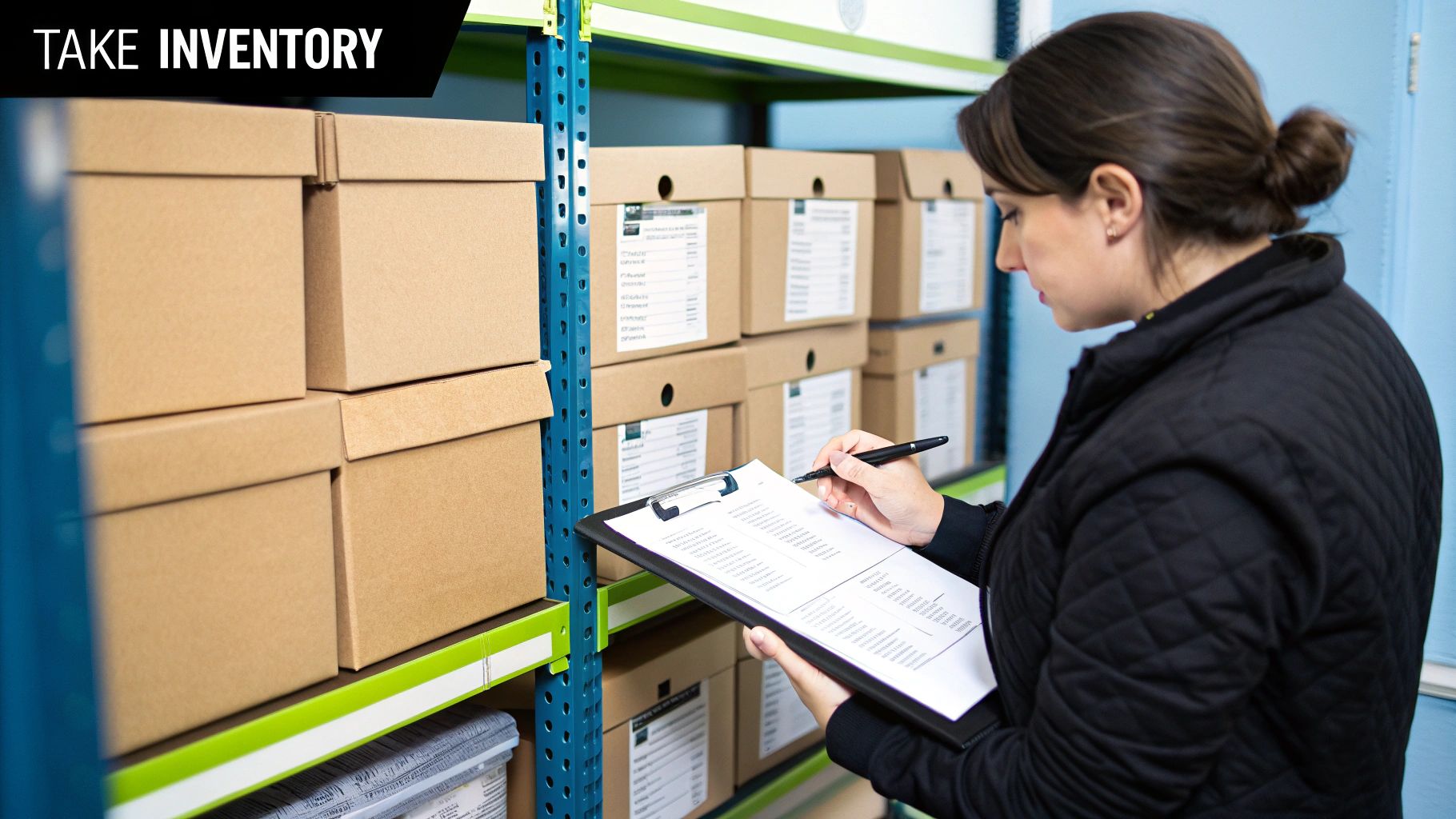
There's a real psychological boost to this method. Seeing the junk and donation piles grow while the unit gets emptier is a powerful visual motivator. It's what keeps you going when the task feels endless.
Handling Different Types of Cleanouts
Not all cleanouts are created equal. The contents of the unit will completely change your game plan. A personal unit is one thing, but a commercial or estate unit requires a whole different level of attention.
- Office Cleanouts: These are all business. You'll likely be dealing with outdated electronics that need proper e-waste disposal, old office furniture that could be liquidated, and mountains of documents that demand secure shredding to protect sensitive information.
- Estate Cleanouts: This is often the most emotionally difficult type of cleanout. You're sorting through a loved one's life, carefully identifying items with sentimental or financial value, and often coordinating with other family members. Speed isn't the goal here; respectful, careful consideration is.
No matter the scenario, the goal is to handle every single item with the right amount of care and diligence.
Tackling a storage unit is as much a mental game as it is a physical one. You'll uncover things you haven't seen in years, and each item can trigger a flood of memories. It's tempting to stop and reminisce, but you have to stay on track. Acknowledge the feeling, set the item aside, and keep moving.
As you sort, you might find that a comprehensive guide to decluttering before a move offers some great strategies that apply here, too. The self-storage industry has exploded, adding nearly 278.8 million square feet of new space in the U.S. over the last five years alone. This just goes to show how many people are facing this exact task. By staying focused, you can turn an overwhelming chore into a manageable project, finally reclaiming your space and your peace of mind.
Tackling a Commercial Storage Unit Cleanout
When your business needs to clean out a storage unit, the game changes completely. This isn't just a weekend decluttering project; it’s a strategic operation. Office cleanouts are all about efficiency, data security, and following strict company and legal guidelines. You're not looking for old photo albums—you're recovering company assets, protecting sensitive information, and getting it done without disrupting your business.
Unlike clearing out your garage, a commercial job means coordinating with multiple people. Before you even think about opening that roll-up door, you need to sync up with key departments. Your IT team will have non-negotiable rules for handling old computers and servers, while facilities management will want a say in the logistics of moving heavy furniture. Getting everyone aligned from the get-go is the only way to avoid expensive mistakes and potential security breaches.
Managing Assets and Information Securely
Honestly, the biggest landmine in any office cleanout is mishandling confidential data. Those old filing cabinets and bankers boxes are probably packed with employee records, client contracts, or financial statements. You absolutely cannot just toss this stuff in a dumpster.
To stay compliant and protect your business, a secure destruction plan is a must.
- Document Shredding: Don’t try to do this yourself with an office shredder. Hire a certified, professional shredding service that can handle it in bulk. They’ll give you a certificate of destruction, which is your proof of compliance if you ever get audited.
- E-Waste Disposal: Old electronics are a goldmine of data. Hard drives need to be either physically destroyed or professionally wiped clean. Work with an e-waste recycler that knows and follows all state and federal disposal laws.
- Asset Liquidation: Office furniture, from desks to conference tables, often has some life left in it—and some resale value. Instead of paying to have it all hauled away, look into liquidating these assets through specialized resellers. You could also donate them to a non-profit for a potential tax write-off.
A detailed inventory is non-negotiable for a business. Before anything leaves the unit, create a comprehensive list of all assets. This is vital for accounting, tracking depreciation, and ensuring no valuable equipment is accidentally discarded. Think of it as a final audit of your stored physical assets.
The Logistics of an Estate Cleanout
While office cleanouts are all business, an estate cleanout is deeply personal and often emotional. It requires a completely different mindset. Clearing out a storage unit that belonged to a loved one means moving with care, collaborating with family, and showing respect for the items left behind. The goal here isn't just to empty a space; it's to honor a legacy.
This type of cleanout almost always starts with legal details. You have to confirm who has the legal right to access and distribute the unit's contents, which is usually laid out in a will or trust. Once you have access, the really sensitive work begins. It’s a good idea to bring in key family members to help identify items with sentimental value, which helps prevent disagreements down the road.
Unlike a typical cleanout where speed is the priority, estate cleanouts demand patience and compassion. Take your time. Set aside heirlooms and personal papers first, and then you can start sorting everything else for donation, sale, or disposal.
Navigating an Estate Storage Unit Cleanout with Care
Clearing out a storage unit after a loved one has passed is in a league of its own. It’s profoundly different from a typical decluttering project. This isn’t just about making space; it’s a heavy, emotional task that involves carefully handling someone's life story, one box at a time. An estate cleanout isn't a race—it requires patience, compassion, and a gentle touch.
The emotional weight can catch you off guard. Every photo album, forgotten trinket, or piece of furniture can bring a flood of memories, making it an incredibly difficult job for family members to tackle alone. The goal shifts from speed to sensitivity. You're not just emptying a space; you're preserving a legacy.
Before you even think about cutting a lock or opening a door, you have to sort out the legal side of things. It's crucial to confirm who has the legal right to access and manage the deceased's property. Usually, this is the executor of the will or the court-appointed administrator. Jumping the gun without the proper authority can create serious legal headaches down the road.
Working with Family and Finding the Valuables
One of the trickiest parts of an estate cleanout is getting everyone on the same page. To keep conflicts from bubbling up, it’s best to bring key family members into the loop early on. Honest, open communication is your most powerful tool here. Deciding ahead of time how to handle items that multiple people might want can save a lot of heartache.
A great strategy is to have family members make a wish list of specific items they hope to find. This makes the distribution process feel more organized and fair for everyone involved.
As you begin sorting, your first job is to separate the truly important items from the rest.
- Sentimental Heirlooms: These are the things that money can't buy. Think photo albums, handwritten letters, or that quirky collection of mugs your loved one cherished. Set these aside immediately for safekeeping.
- Items for Appraisal: Anything that looks like it might have real financial value—antiques, art, jewelry, or rare collectibles—should be put in a separate pile for a professional appraisal. Don't try to guess its worth.
- Important Documents: Keep a sharp eye out for personal papers like property deeds, vehicle titles, bank statements, or old tax records. These documents are absolutely critical for settling the estate.
When you're going through an estate, remember that an item's value isn't always measured in dollars. That worn-out armchair or simple piece of jewelry could hold immense sentimental meaning for a family member. Treat everything you find with the respect it deserves.
A Compassionate Approach to Sorting and Disposal
Once you’ve secured the heirlooms and potential valuables, you can start sorting what's left. A good way to approach this is with a modified four-box method: Distribute, Sell, Donate, and Dispose. The "Distribute" pile is unique to estate cleanouts, holding all the items you’ve already earmarked for specific family members.
Making these decisions is emotionally draining. It’s completely okay—and even necessary—to take frequent breaks. Share stories, laugh, cry, and acknowledge the feelings that come up. This isn't just a physical task; for many, it's a vital part of the grieving process.
When the physical and emotional toll becomes too much, don't hesitate to call for backup. A professional junk removal service that specializes in estate cleanouts can be a huge relief. They can handle the heavy lifting and responsible disposal, giving you and your family the space to focus on what really matters.
What to Do with Everything You Have Sorted
Okay, the hard part is over. The sorting is done, the piles are made, and you can finally see the light at the end of the tunnel. Now comes the most satisfying step: clearing it all out for good.
This is where you turn those carefully sorted piles into tangible results—whether that’s cash in your pocket, a donation to a good cause, or simply the sweet relief of reclaimed space. Each category you’ve created—sell, donate, and junk—needs its own game plan.
Your "sell" pile is your chance to recoup some of your storage costs. For bulky items like furniture, appliances, or exercise equipment, local online marketplaces like Facebook Marketplace or Craigslist are fantastic. This is a common strategy for both office cleanouts (selling old desks and chairs) and estate cleanouts (selling furniture or appliances).
For smaller, more valuable finds like designer clothes, vintage collectibles, or rare books, platforms like eBay and Poshmark open you up to a much wider audience. Getting the price right is crucial for making a quick sale. Taking a few minutes to learn how to price items for resale can make a huge difference in how much you earn and how fast things move.
Strategies For Donating And Disposing
Next up is the donation pile. Your goal here is to find a reputable charity where your items will do the most good. Local shelters, community centers, Goodwill, and The Salvation Army are always great options.
Pro Tip: Always check their donation guidelines online or give them a quick call first. Some organizations have restrictions on what they can accept, like older tube TVs or large appliances. Many will even schedule a free pickup for large furniture, which is a massive help.
Finally, we have the junk pile. For a small amount of trash, you can probably just haul it to the local dump yourself in a truck or a few car trips. But when you’re facing a mountain of junk, especially after a big office cleanout, you really have two main options.
- Renting a Dumpster: This is a solid DIY choice if you want to work at your own pace. You can get a dumpster delivered and spend a weekend filling it up as you go.
- Hiring a Junk Removal Service: This is the "easy button." A professional crew comes in, does all the heavy lifting, and hauls everything away for you. The whole process can be over in just a couple of hours.
Choosing between a dumpster and a junk removal service really boils down to cost versus convenience. A dumpster might seem cheaper at first glance, but a junk removal service saves you a ton of time and physical labor. For big, overwhelming jobs like an estate cleanout, that convenience is often worth every penny.
The world of clearing out stored goods is always evolving. The COVID-19 pandemic, for instance, turned the storage unit auction market on its head in 2020. After an initial freeze, the market exploded with record-breaking auction prices, showing just how quickly things can change.
Answering Your Top Questions About Storage Unit Cleanouts
When you're staring down a storage unit that needs to be emptied, a lot of questions start bubbling to the surface. It doesn't matter if it's your own personal unit, a complex office cleanout, or an emotional estate cleanout—getting clear answers upfront makes the entire job feel less daunting. We've been in the business for a long time, so we’ve heard just about every question there is. Here are the answers to the most common ones.
How Much Does It Cost to Clean Out a Storage Unit?
There’s no single price tag for a storage unit cleanout. The final cost really boils down to the unit’s size, how packed it is, and where you're located. A small, lightly filled 5×5 unit might only cost a few hundred dollars for a professional junk removal service. But if you're dealing with a massive 10×30 unit crammed floor-to-ceiling, the price could easily top a thousand dollars.
Several key factors will influence your quote:
- Volume of Junk: Most junk removal companies, including us, base our pricing on how much truck space your items fill up.
- Item Type: Heavier, denser materials like old construction debris or concrete can sometimes cost more to haul.
- Special Disposal Fees: Things like mattresses, old tires, or e-waste often come with extra fees. This is because they require special handling and recycling processes to be disposed of correctly and legally.
For more specialized situations, other costs can pop up. If you're handling an office cleanout, you might need to factor in certified document shredding or the proper disposal of computers and servers. With an estate cleanout, hiring a professional appraiser to evaluate valuables is a separate, but crucial, expense that comes before the junk removal even starts.
What Is the Fastest Way to Clean Out a Storage Unit?
Hands down, the quickest way to get a storage unit cleared is to hire a full-service junk removal company. It’s the ultimate hands-off solution. A professional crew shows up, handles all the sorting, lifting, and loading, and can often have an entire unit emptied in just a few hours. You point, they haul. It’s as simple as that.
If you’re set on doing it yourself, speed is all about preparation and momentum. Show up with a rented truck already waiting, all the boxes and bags you’ll need, and a few friends who owe you a favor. The real key is to make quick, confident decisions. Sort everything into your "keep," "donate," and "junk" piles and don't look back. The moment you start hesitating is the moment the whole process grinds to a halt.
The biggest time-waster in any cleanout is indecision. The more you second-guess whether to keep that old chair or toss that box of random cables, the longer you'll be stuck there. Trust your gut and keep moving.
What Happens to Items Left in an Abandoned Storage Unit?
When a renter stops paying for their unit and disappears, the facility owner doesn't just get to keep the stuff. There's a legal process involved. After a certain grace period defined by state law, and after multiple failed attempts to contact the tenant, the facility can take possession of the unit’s contents.
From there, the items are usually sold at a public auction. The facility's goal isn't to profit, but to recoup the lost rent and any late fees. Bidders typically buy the entire unit "as-is," often after just a quick peek from the doorway. If the auction price happens to be more than what the original tenant owed, the facility is legally required to give the surplus money to that tenant—though finding them can be a whole other challenge. Most facilities will also set aside personal documents and family photos for the tenant to reclaim.
Can I Just Throw Everything Away in My Storage Unit?
Legally speaking, if you own the items, you have the right to dispose of them. However, that doesn't mean you can just back a dumpster up to the unit and start tossing. You're still bound by all local and federal regulations for waste disposal. That means no electronics, tires, paint, chemicals, or other hazardous materials can go into a regular dumpster.
More importantly, a "throw-it-all-out" strategy is a terrible idea in certain contexts.
- For an estate cleanout: You have a fiduciary and ethical duty to the beneficiaries. You must identify and preserve anything with monetary or sentimental value. Tossing everything could not only cause irreversible heartbreak but also land you in serious legal trouble.
- For an office cleanout: You’re dealing with company assets and, more critically, sensitive data. Simply throwing away old computers or unshredded files could lead to a massive data breach, creating huge liabilities for the company.
While it might seem like the simplest route, blindly tossing everything is a shortcut that can lead to major problems down the road. A quick, methodical sorting process is always the smarter, safer, and more responsible way to go.
When you're facing a mountain of junk from an office, estate, or personal storage unit, you don't have to do it alone. Green Guys Junk Removal provides fast, professional, and eco-friendly cleanout services across the Atlanta metro area. Our experienced team handles all the heavy lifting, sorting, and responsible disposal, so you can reclaim your space without the hassle. Ready for a fresh start? Visit https://greenguysjunkremoval.com to book your appointment online.
Article created using Outrank